
Nepal's AI Shortcut: Empowering a Nation with Open-Source Intelligence
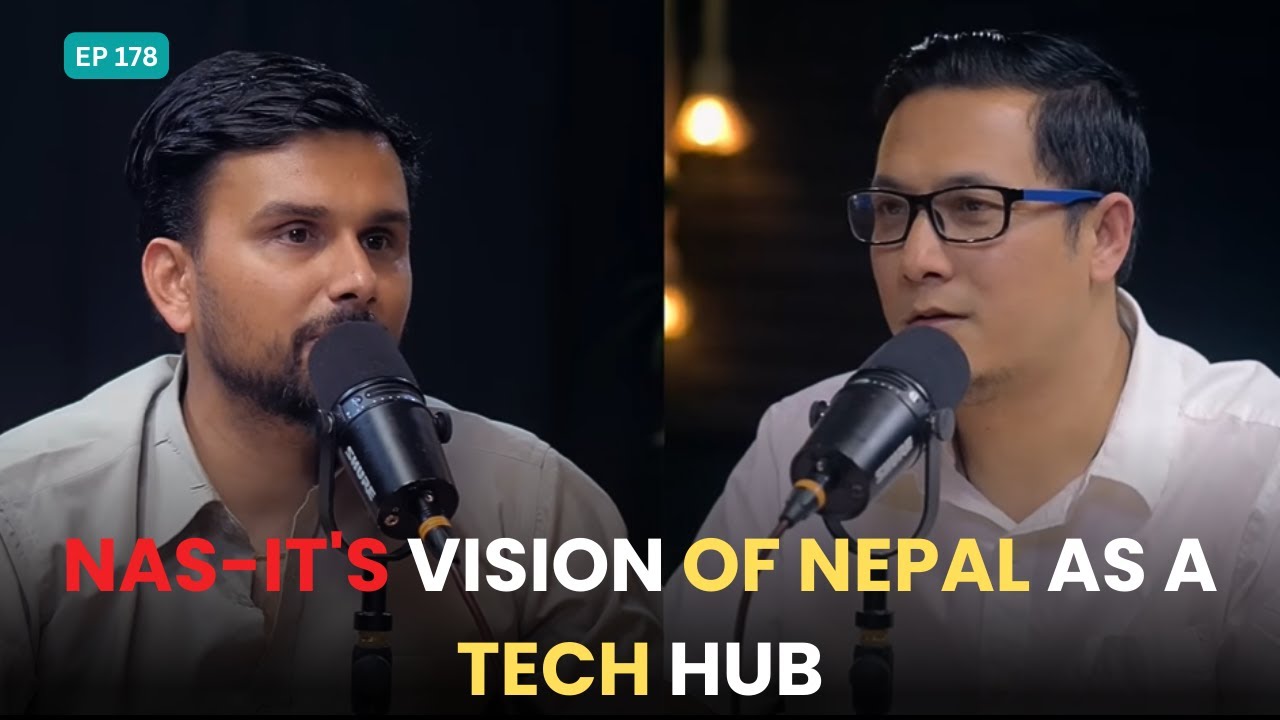
The world of artificial intelligence is moving at a dizzying pace, and for tech entrepreneur Prasish Raj Bhandari, the shift was so profound it prompted him to halt all other company operations and dedicate himself entirely to AI. This dramatic pivot, which began in December, wasn't just a personal choice but a recognition of a "tectonic shift" in the industry, where AI's capabilities exploded from simple auto-completion to complex reasoning and full application development within a matter of months. His daily 10-12 hour deep dive into AI since then underscores the urgency and immense potential he sees, especially for a country like Nepal.
The AI Revolution's Tectonic Shift
Prasish explains that while AI has been around for a while, December marked a critical turning point. Before then, AI coding was largely limited to auto-complete functions; suddenly, it could build and compile entire applications from a simple prompt. This jump from 10% to 95% AI-generated code in a year is, as he puts it, "insane" and promises massive changes across industries.
The evolution of AI has moved beyond mere token generation to sophisticated reasoning, where models can think in steps, much like humans. This capability allows AI to take different angles and provide nuanced answers. What's more, AI is now "tool calling," capable of performing actions like sending messages or even designing in software like Photoshop or Figma.
This progression has led to "agentic" AI, where individual AI agents can perform specific tasks. When a large task requires multiple steps, different agents can spawn, complete their parts, and then combine their efforts, mirroring how human teams collaborate.
The Power of Open-Source AI
A significant driver of this rapid progress and accessibility is the rise of open-source AI models. Prasish notes that while giants like OpenAI and Google initially dominated with expensive, closed-source models, the landscape shifted when countries like China, facing chip embargoes, strategically decided to open-source their AI models to foster global competition. This strategy has led to an explosion of powerful, free, and rapidly improving models.
Meta's Llama models were early contributors, but the real competition intensified with releases from Chinese companies like Zhipu, Qwen, and MiniMax. These open-source models are now often on par with, or even surpassing, closed-source alternatives in various benchmarks, especially for tasks like image generation, and are becoming much cheaper to run.
Prasish categorizes AI models into three tiers. At the top are "frontier models," often closed to the public and used by leading labs for internal research and system improvement. Below that are paid models from companies like OpenAI and Anthropic, which offer superior reasoning but come with a monthly cost that can be prohibitive for many. The third tier comprises "open-weight"