
Nepal's Education Paradox: The Boom in Degrees, The Bust in Opportunity
Every day, billboards across Nepal proudly display the names of students who have achieved near-perfect scores in their examinations, 96%, 97%, even higher. These images project an education system thriving on academic excellence. Yet, beneath this veneer of success, a starkly different reality unfolds: an estimated 2,500 to 3,000 young Nepalis leave the country daily for educational migration, with thousands more departing for labor opportunities. This mass exodus reveals a profound paradox: a nation celebrating academic achievement while simultaneously failing to provide a relevant future for its most educated youth. [Source: Dr. Usha Bhandari]
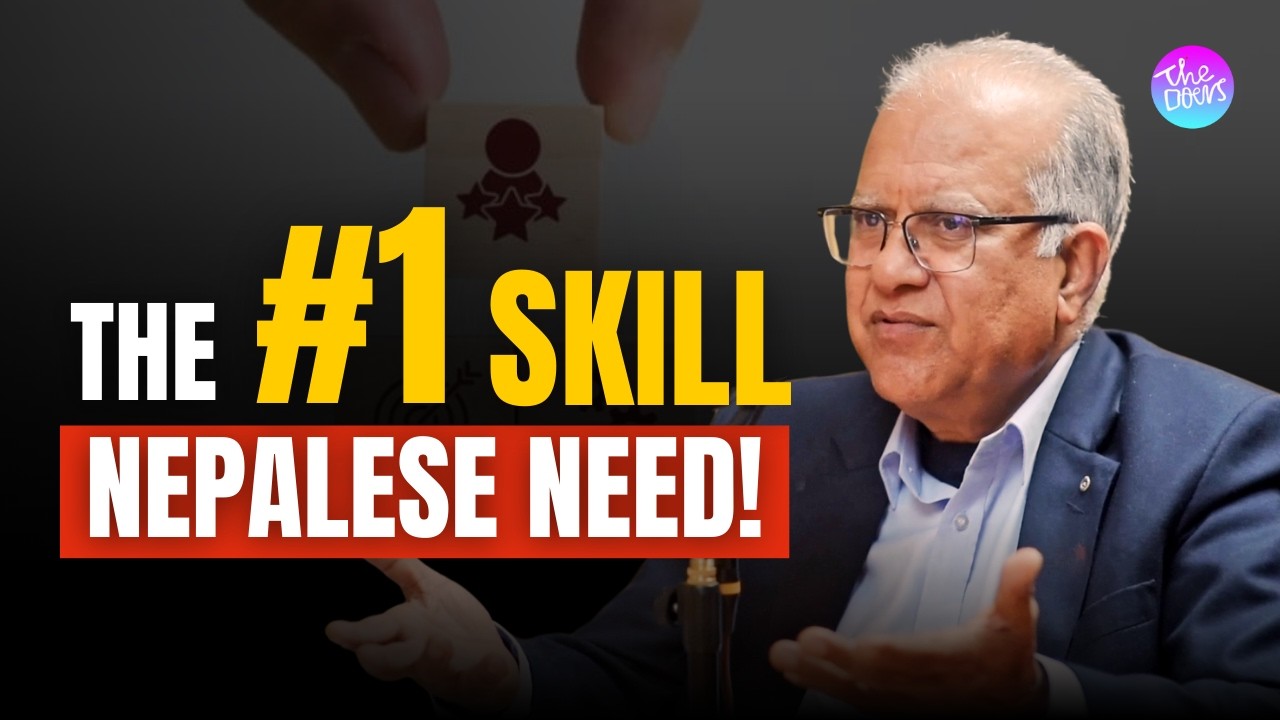
Dr. Usha Bhandari, a specialist in Technical and Vocational Education and Training (TVET) with over three decades in the education sector, points to the core of this crisis: "The biggest single problem is that our country's education system, the way education is imparted, the curriculum, is not market-oriented, not labor market-oriented." The consequence, she explains, is a productive workforce that struggles to find employment, leading to a pervasive narrative that "there is nothing here" and a desperate search for opportunities abroad.
The Irrelevance Trap: When Education Ignores the Market
The rapid proliferation of colleges offering international degrees in Nepal is not merely a sign of market expansion; it's a symptom of a deeper systemic failure. Local institutions, Dr. Bhandari argues, have largely failed to deliver because they haven't collaborated with the job market. Curricula remain static, teaching methods are outdated, and the crucial link between academic learning and real-world employment is severed. This disconnect produces graduates who are ill-equipped for the demands of a rapidly changing global economy.
In a capital-driven country, one might expect institutions producing "below quality and market standards" to fail. However, Dr. Bhandari suggests that many are, in fact, struggling to survive, evidenced by mergers, closures, and a dwindling student base. Students, too, are often unaware of how their chosen education will translate into employment, while institutions themselves rarely prioritize job outcomes. The result is a system that, in Dr. Bhandari's blunt assessment, is "deceiving our students, our youth."
Beyond the Classroom: The Global Standard of Accountability
Globally, leading educational systems employ rigorous accreditation processes that extend far beyond academic scores. Institutions are often evaluated based on program marketability, the "permeability" of their offerings, and, crucially, the employment rates of their graduates. Key Performance Indicators (KPIs) track whether graduates find jobs, at what level, and if their positions align with their training. Failure to meet these standards can lead to reduced ratings, loss of accreditation, and a direct impact on student enrollment, a built-in mechanism for accountability.
In Nepal, while the University Grant Commission (UGC) and the Council for Technical Education and Vocational Training (CTEVT) have accreditation mandates, their implementation often falls short. Dr. Bhandari notes that while graduation rates might be considered, the authority to penalize institutions for poor employment outcomes is largely absent. This lack of robust, employment-focused accreditation means that the crucial feedback loop between the labor market and educational providers remains weak, perpetuating the cycle of irrelevant degrees. [Source: University Grants Commission, Nepal; CTEVT]
Rewriting the Rules: The Power of Permeability and Prior Learning
A critical concept for reforming Nepal's education system is "permeability" or "mobility", the transferability of courses, competencies, and credits across different educational streams and into the labor market. Currently, Nepal's education system often operates in silos, with technical and vocational education (TVET) and higher education pathways remaining largely separate. This means that valuable skills acquired through TVET or work experience are often not recognized by universities, limiting upward mobility.
Dr. Bhandari champions the idea of Recognition of Prior Learning (RPL), a system where an individual's accumulated experience and skills, regardless of how they were acquired, are formally assessed and rewarded. Imagine a cook who started as a dishwasher and, over years, mastered dozens of dishes. Through RPL, their practical expertise could be recognized and awarded a qualification level, enhancing their bargaining power, confidence, and market mobility. RPL is not merely about getting a piece of paper; it's about validating a person's capabilities, increasing their earning potential, and providing pathways for further education without having to start from scratch.
Nepal's National Qualifications Framework was approved in 2020 and is intended to create more connected pathways between general education, TVET and the labour market. Recognition of Prior Learning is also part of Nepal's broader vocational qualification system. [Source: Nepal Vocational Qualifications System]
The Industry-Led Future: Where Academia and Work Converge
The traditional divide between academia and industry is increasingly unsustainable. Dr. Bhandari argues for an education system that is "totally industry-led", where the labor market, not just factories, but specific sectoral industries, drives curriculum design and delivery. Industry possesses the experience, skills, jobs, and financial resources that academia often lacks. While academia provides theoretical frameworks, industry offers the real-world application, the tools, and the competitive environment necessary for true skill development.
Collaboration, though slow in Nepal, is the only viable path forward. Dr. Bhandari highlights nascent efforts, such as NAS IT working with Open University and Manmohan Technical University collaborating with the Federation of Contractors Association of Nepal to develop industry-integrated Bachelor of Technology programs. These initiatives embrace "work-integrated learning" approaches, where theoretical inputs from academia are combined with extensive practical learning within industry settings. This symbiotic relationship ensures that education remains relevant and graduates are immediately employable.
Nepal is also developing formal apprenticeship and work-based training programmes. CTEVT has been working on apprenticeship models that bring industry into the training process and connect practical learning with employment. [Source: CTEVT]
The Shifting Value of Work: Why Blue-Collar Might Outearn White-Collar
The traditional distinction between "blue-collar" and "white-collar" jobs, often imbued with class and caste biases in Nepal, is rapidly eroding. Dr. Bhandari foresees a future where skilled blue-collar professions, like plumbing, could command higher earnings than newly graduated software engineers. This shift is driven by two factors: the increasing technological sophistication of these roles, with modern plumbing requiring advanced tools and techniques, and the direct, immediate demand for such services.
"Recognition of work is through money," Dr. Bhandari asserts. As these jobs become more technologically advanced and their value is increasingly recognized, the financial rewards will follow. Furthermore, as systems like RPL and permeability gain traction, the social stigma associated with vocational work will diminish, paving the way for a more equitable and merit-based labor market. For this to fully materialize in Nepal, however, there must be an investment in modern tools and equipment to enhance efficiency and reduce the physical burden of these jobs.
Cultivating a Culture of Action: Breaking the Cycle of Apathy
Dr. Bhandari expresses deep frustration with the "slowness, laziness, and obstruction" that plague Nepal's education sector, particularly the tendency to use "laws and policies as an excuse for everything." This policy paralysis, especially since federalization, has led to a decade of lost progress.
The current generation of youth, often seen as disengaged, is also a product of this system. Many pursue college merely for "fun" or as a stepping stone to going abroad, influenced by the pervasive narrative that opportunities lie elsewhere. Parents, too, often push their children towards foreign education, fueled by a lack of awareness about local possibilities and effective career guidance. Dr. Bhandari argues that it's not a lack of knowledge, but a lack of guidance and a missing "career orientation" that prevents youth from demanding better from their institutions. Universities and colleges must step up to provide robust career counseling, showcasing local opportunities and empowering students to understand their rights and potential.
Embracing a Flexible Future: Learning, Earning, and Thriving
Despite the challenges, Dr. Bhandari remains optimistic about the future of education in Nepal. She envisions a system characterized by flexibility, responsiveness, and a deep respect for work. This future will see:
- Modular Learning: Instead of rigid four-year degrees that risk becoming outdated, education will be delivered in shorter, focused modules that are immediately transferable and responsive to market needs.
- Work-Integrated Learning (WIL) and Blended Modes: Curricula will embed practical work experience throughout, not just as an afterthought. Blended learning, combining virtual and physical sessions, will allow students to learn at their own pace, work, and earn simultaneously, breaking the social norm of delaying income until after graduation.
- Remunerated Internships: The exploitative practice of students paying for internships will end. Internships will be paid, recognizing the value students bring to industries even while learning.
The Swiss model, which Dr. Bhandari has studied extensively, offers a powerful blueprint. Switzerland's success stems from starting small, focusing on quality, and fostering an intensely private sector-led education system. Apprenticeship is central, with young people "sniffing" out career paths from an early age, earning a living wage while learning, and having permeable pathways to higher education. This creates a secure future where youth know their livelihood and career trajectory. [Source: State Secretariat for Education, Research and Innovation, Switzerland]
Initiatives like "Practice Enterprise" (Digital Dreamers Nepal), supported by the Swiss Embassy, aim to replicate this by creating virtual, simulated work environments where youth can gain practical experience and bridge the school-to-work transition. Such models, which bring academia and the labor market together on one platform, are crucial for Nepal.
The education paradox, high academic scores coexisting with a mass exodus of talent, is a call to action. By radically aligning education with the labor market, valuing practical skills through permeability and RPL, fostering robust industry-academia collaboration, and cultivating a culture of purposeful learning and earning, Nepal can transform its education system from a pipeline to brain drain into a powerful engine for national development. The future won't wait for institutions to catch up; it demands a proactive embrace of innovation, flexibility, and a deep respect for the dignity of all work.