
The Price of Climate Injustice: Why Nepal Must Demand, Not Beg
Money does not grow on trees, or so the saying goes. But for a country like Nepal, rich in natural capital yet increasingly vulnerable to the consequences of climate change, the real question is not simply whether its forests can generate economic value. It is whether the world is willing to recognize the price Nepal is already paying for a crisis it did not create. With 45% of its land covered by forests and natural ecosystems that absorb more carbon than the country emits, Nepal possesses immense environmental value. Yet, despite contributing only a negligible share to the emissions driving global warming, it faces melting glaciers, increasingly destructive floods, landslides, and the growing threat of climate-related displacement. This is not merely an environmental challenge; it is one of the clearest examples of climate injustice.
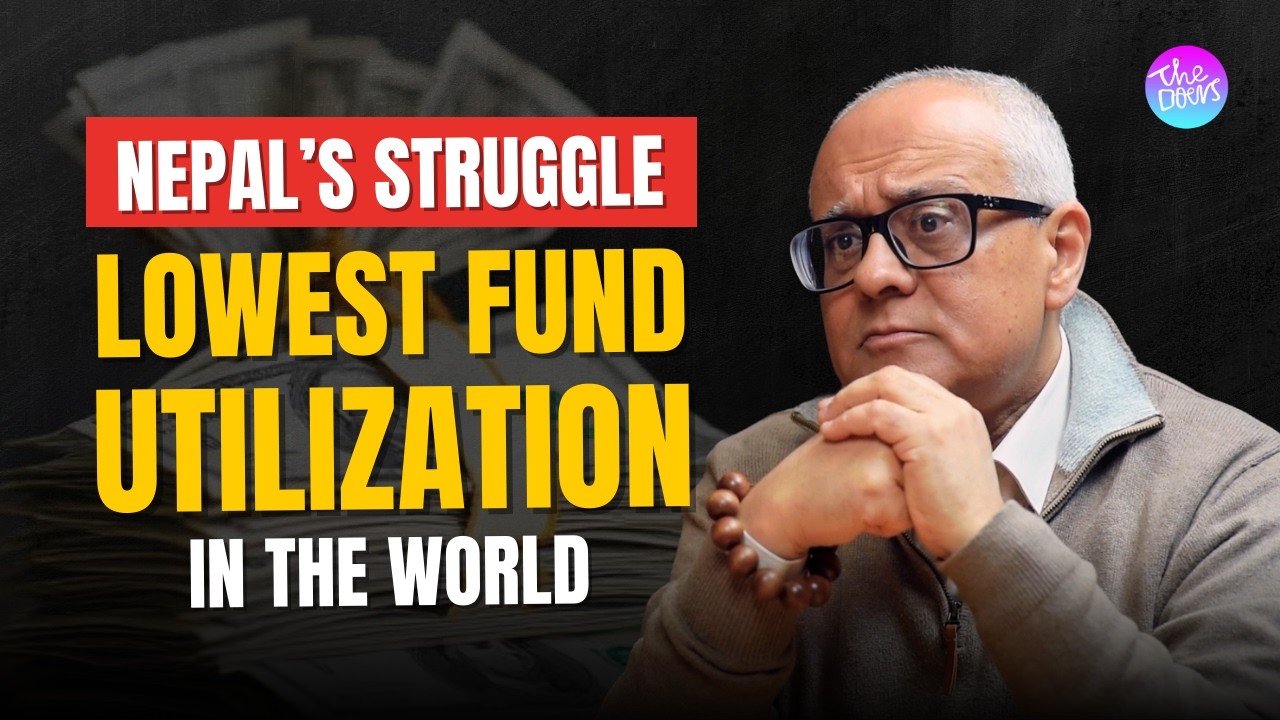
Prab Dahal, Vice President of Eastwood Forest LLC, a private equity firm specializing in natural resource investments, believes Nepal stands at a critical juncture. His work involves managing forests to mitigate climate change by capturing carbon dioxide and monetizing those environmental services through global carbon markets. But his argument for Nepal goes beyond the economics of carbon credits. He believes the country must fundamentally change how it positions itself in the global climate conversation. Nepal should not see itself merely as a vulnerable nation asking wealthy countries for assistance. It should recognize that it is suffering the consequences of an industrial system it did not build, while simultaneously protecting ecosystems that provide benefits to the entire world. The question, therefore, is not simply how much climate aid Nepal can receive, but what the world owes countries forced to pay for a crisis created elsewhere.
Paying the Price for a Crisis Nepal Did Not Create
Nepal's position in the global climate crisis is uniquely unjust. The world's major economies built their prosperity over centuries of industrialization powered by coal, oil, and other fossil fuels. Those emissions accumulated in the atmosphere and now contribute to rising global temperatures. Nepal did not follow the same path. It did not become a major industrial emitter, nor did it build its economy through centuries of carbon-intensive development. Yet the consequences of global warming are being felt directly across the country, from the Himalayas to the plains of the Terai.
Melting glaciers and expanding glacial lakes create increasing risks for mountain communities, while unpredictable rainfall, floods, and landslides threaten homes, agriculture, infrastructure, and livelihoods. When roads and bridges are destroyed, communities become isolated. When farmland is washed away, families lose their source of income. When disasters strike repeatedly, governments are forced to spend scarce development resources rebuilding what was already built. The economic consequences extend far beyond the immediate disaster, slowing long-term development and placing additional pressure on a country that is still working to expand infrastructure, create jobs, and improve public services.
This is Nepal's climate paradox. The country's natural systems absorb significant amounts of carbon, making its forests and ecosystems an important environmental asset, yet it remains highly vulnerable to the consequences of global warming. Dahal argues that this contradiction should fundamentally reshape how Nepal approaches climate finance. If industrialization elsewhere is contributing to the melting of Nepal's glaciers and the destabilization of its ecosystems, then the countries and economies that benefited from that industrialization cannot simply treat climate finance as an act of generosity. There is a deeper question of responsibility involved.
Demand, Don't Beg: The Case for Climate Justice
Dahal's most forceful argument is that Nepal should stop framing climate resilience as something it must politely request from the international community. The traditional language of climate finance often places vulnerable countries in the position of aid recipients. Governments prepare proposals, international organizations approve projects, and donor agencies provide funding through limited cycles. But Dahal challenges the assumption that this should be treated as charity. If Nepal is spending money to protect its people from floods, glacier-related disasters, and other climate consequences caused largely by global emissions, then the country is not asking for a favor. It is confronting the consequences of a global economic system in which responsibility has been distributed deeply unequally.
The distinction between asking and demanding is significant. Asking suggests that assistance is voluntary. Demanding climate justice suggests that those who contributed disproportionately to the crisis have a responsibility to participate in addressing its consequences. Countries that industrialized first accumulated enormous wealth while releasing large quantities of greenhouse gases into the atmosphere. Countries like Nepal, which contributed comparatively little to that historical process, are now being forced to spend resources adapting to the resulting consequences. The cost of climate change is therefore not being paid equally, and that imbalance lies at the center of the climate justice argument.
Dahal also questions the effectiveness of relying solely on traditional NGO and INGO funding. Short-term projects can provide important support, but three-year funding cycles and externally designed interventions do not necessarily create permanent systems capable of addressing long-term climate threats. Nepal needs sustained investment in infrastructure, communities, institutions, and resilience. More importantly, it needs the ability to determine its own priorities rather than remaining dependent on funding cycles designed elsewhere. Climate justice, in this sense, is not simply about receiving more money. It is about gaining the economic and political power to decide how the country's climate future will be built.
The Economic Value of Nepal's Natural Capital
Nepal's forests provide an important opportunity to strengthen this argument because they deliver environmental services that benefit far beyond the country's borders. Forests are not merely landscapes or collections of trees. They function as natural systems that absorb and store carbon dioxide, regulate water systems, protect biodiversity, and support communities. In a world attempting to reduce global emissions, these environmental services have increasingly acquired economic value through carbon markets and climate finance.
Dahal explains that carbon credits can generally be generated through mechanisms such as avoided emissions, where forests that might otherwise have been cleared are protected, and removals, where growing trees actively capture carbon dioxide from the atmosphere. These mechanisms create a financial value around environmental outcomes that were historically invisible in traditional economic systems. Companies and institutions seeking to compensate for emissions can purchase verified carbon credits, directing financial resources toward projects that demonstrate measurable climate benefits.
For Nepal, this creates an important opportunity. The country is already protecting natural ecosystems that provide global benefits, but it has not always possessed the infrastructure, expertise, or negotiating power required to capture the full economic value of those services. Carbon credits and other forms of climate finance could potentially allow Nepal to move beyond donor dependence by building market-based systems that reward environmental stewardship. Instead of seeing forests simply as land that must be protected without generating economic returns, Nepal could develop systems where conservation, sustainable management, and local economic development work together.
This is particularly important for a landlocked country. Traditional exports require transportation networks, logistics infrastructure, border access, and physical movement of goods. Carbon, once measured and verified, does not need to be physically transported. The environmental outcome can be recorded and traded digitally across borders. This creates the possibility of directing international capital into rural areas without many of the logistical barriers that have historically limited Nepal's participation in global markets.
From Passive Preservation to Sustainable Forest Management
The opportunity also requires Nepal to rethink the relationship between conservation and economic development. Dahal argues that protecting forests does not necessarily mean leaving them completely untouched. Through approaches such as Improved Forest Management, forests can be managed in ways that maintain ecosystem health while also creating sustainable economic value. Selective harvesting of mature or dying trees, when carried out responsibly, can help maintain forest health while providing timber for construction and other domestic industries.
The principle behind this approach is that forests are dynamic ecosystems. Trees grow, age, decay, and die, and unmanaged forests can accumulate deadwood and other material that increases the risk of destructive wildfires. Sustainable forest management can therefore involve maintaining biodiversity and ecosystem services while allowing limited economic use of forest resources. If the rate of harvesting is aligned with the forest's ability to regenerate, the forest can continue functioning as a carbon sink while also creating jobs and reducing dependence on imported timber.
For Nepal, this presents a potential dual opportunity. The country can contribute to global climate mitigation while developing domestic industries around sustainable forestry. Rural communities can benefit from employment, local industries can access raw materials, and forests can continue providing environmental services. The challenge is ensuring that economic activity is genuinely sustainable and that climate value is not undermined in the process.
Building the Ecosystem: From Climate Assets to Climate Power
Despite Nepal's immense natural potential, forests alone cannot automatically generate climate wealth. The country must build a complete ecosystem capable of measuring, verifying, developing, and marketing its environmental assets. Dahal points to a number of important components that are necessary if Nepal is to participate effectively in global carbon markets and broader climate finance.
-
Generation: Identifying and developing projects across forestry, biogas, agriculture, waste management, and other sectors capable of generating measurable climate benefits.
-
Monitoring, Reporting, and Verification (MRV): Building the technical capacity to accurately measure environmental outcomes and verify carbon reductions without depending entirely on expensive foreign expertise.
-
Registry: Establishing transparent systems that track carbon credits and ensure that they are not double-counted or misrepresented.
-
Aggregation: Creating mechanisms that can combine smaller climate projects from communities and individuals into larger volumes attractive to institutional buyers.
-
Marketing: Developing the capacity to connect Nepali climate projects directly with international buyers, investors, and organizations seeking credible climate solutions.
Without these systems, Nepal risks creating valuable environmental assets while allowing much of the economic value to be captured elsewhere. Dahal believes the government should play a facilitative role by establishing clear rules, ensuring transparency, and creating a level playing field for private-sector participation. Over-regulation or attempts to control every aspect of the market can discourage investment and slow innovation. At the same time, weak regulation could allow communities or the country itself to lose control of valuable natural resources. The challenge is to create a system that protects national interests while allowing capital, expertise, and entrepreneurship to participate.
One of the most important unresolved questions concerns carbon rights, particularly within Nepal's community forests. Local communities have played an important role in protecting and managing forests, yet questions around land tenure and the ownership of the carbon stored in those forests remain critical. If communities are expected to continue protecting natural ecosystems, they must also have a clear and fair stake in the economic value those ecosystems create. Otherwise, climate finance could reproduce another form of injustice, where local communities protect forests while external organizations and intermediaries capture most of the financial benefits.
A New Mindset for a Borderless Future
For Nepal's young people, climate justice is not only a political issue. It is also an emerging economic frontier. Dahal encourages a shift in thinking: instead of asking, "What will I do in climate?" young people should ask, "How can I add a climate perspective to what I am already doing?" Climate change is an interdisciplinary challenge, and its solutions will emerge from technology, agriculture, finance, construction, business, science, and entrepreneurship.
Opportunities exist in areas such as regenerative agriculture, waste recycling, biochar production, wetland restoration, climate technology, carbon accounting, and environmental monitoring. A software developer can build tools that measure environmental data. A finance professional can work in climate investment. An entrepreneur can develop waste-management solutions. A farmer can adopt practices that improve soil health and potentially reduce or store carbon. The future climate economy will not belong only to environmental scientists. It will belong to anyone capable of connecting their expertise with one of the world's most urgent challenges.
Nepal's geographical limitations are also becoming less significant in an increasingly digital and global economy. Affordable internet, mobile technology, and access to global knowledge mean that a young person in Nepal can increasingly participate in industries that were once limited by geography. Dahal points out that many Nepali forestry graduates are already working in global carbon markets and natural resource industries across developed countries. Their knowledge and networks represent an important opportunity for Nepal's younger generation, who can look beyond local borders for mentorship, partnerships, investment, and access to international markets.
The central challenge is to stop thinking of Nepal as a small country with limited opportunities. In climate finance, natural capital, and emerging green industries, the country's geographical and environmental characteristics could become strategic advantages. Local problems can become global solutions, particularly when climate challenges increasingly affect every country in the world.
The Imperative of Action: Beyond the Summit
The conversation around Nepal's climate future is not simply about whether the country will receive enough aid at the next international summit. It is about whether Nepal can build the economic, political, and institutional capacity to protect its people while asserting its rightful position in the global climate conversation. The global economy is increasingly placing value on carbon reduction, ecosystem restoration, biodiversity, and natural capital. Institutional investors, corporations, governments, and insurance companies are all facing growing financial risks associated with climate change, creating greater demand for credible climate solutions.
Nepal possesses many of the assets needed to participate in this changing economy. It has forests, mountain ecosystems, biodiversity, community-managed natural resources, and a young population capable of building new businesses and institutions. But perhaps its most important asset is its moral position. Nepal did not create the climate crisis, yet it is already paying for its consequences. That reality gives the country a legitimate basis to demand that climate responsibility be distributed more fairly.
Realizing this potential requires a fundamental shift: from viewing climate change only as a disaster to recognizing the economic systems emerging around climate solutions; from donor dependence to greater economic leverage; from passive victimhood to active negotiation; and from simply protecting natural resources to strategically valuing the services they provide to the world.
Nepal should protect its forests because they are essential to its people and its future. But it should also recognize that those forests provide benefits to a world that increasingly needs natural systems to absorb carbon and stabilize the climate. Nepal should seek climate finance not as charity, but as part of a broader demand for responsibility and justice. And it should build the institutions and expertise required to ensure that the value created from its natural capital benefits its communities and strengthens the country itself.
The climate crisis was not created equally, and its consequences are not being experienced equally. Nepal stands at the intersection of both realities. The country is among those paying the price for global industrialization while possessing natural assets that could help address the crisis itself. The path forward therefore requires more than conservation, more than carbon markets, and more than international promises. It requires a national strategy built around climate justice, economic sovereignty, and the recognition that countries protecting the planet should not be forced to pay alone for its survival.
The question is no longer whether Nepal deserves help.
It is whether the world is finally ready to accept responsibility.